Beyond the Black Box: Implementing KNN for Feature Similarity from Scratch
Technical breakdown of the KNN algorithm, Euclidean distance, and feature scaling, with a from-scratch Python implementation for understanding similarity-based classification.
Introduction
As Web101 by Han expands into deeper technical systems, it is not enough to just call an API. To build truly resilient AI systems, we need to understand the underlying geometry of decision-making. Today, we are looking at K-Nearest Neighbors (KNN), a fundamental classification algorithm, and building it from first principles to see how similarity is actually calculated in a multi-dimensional space.
The Logic: Proximity as Classification
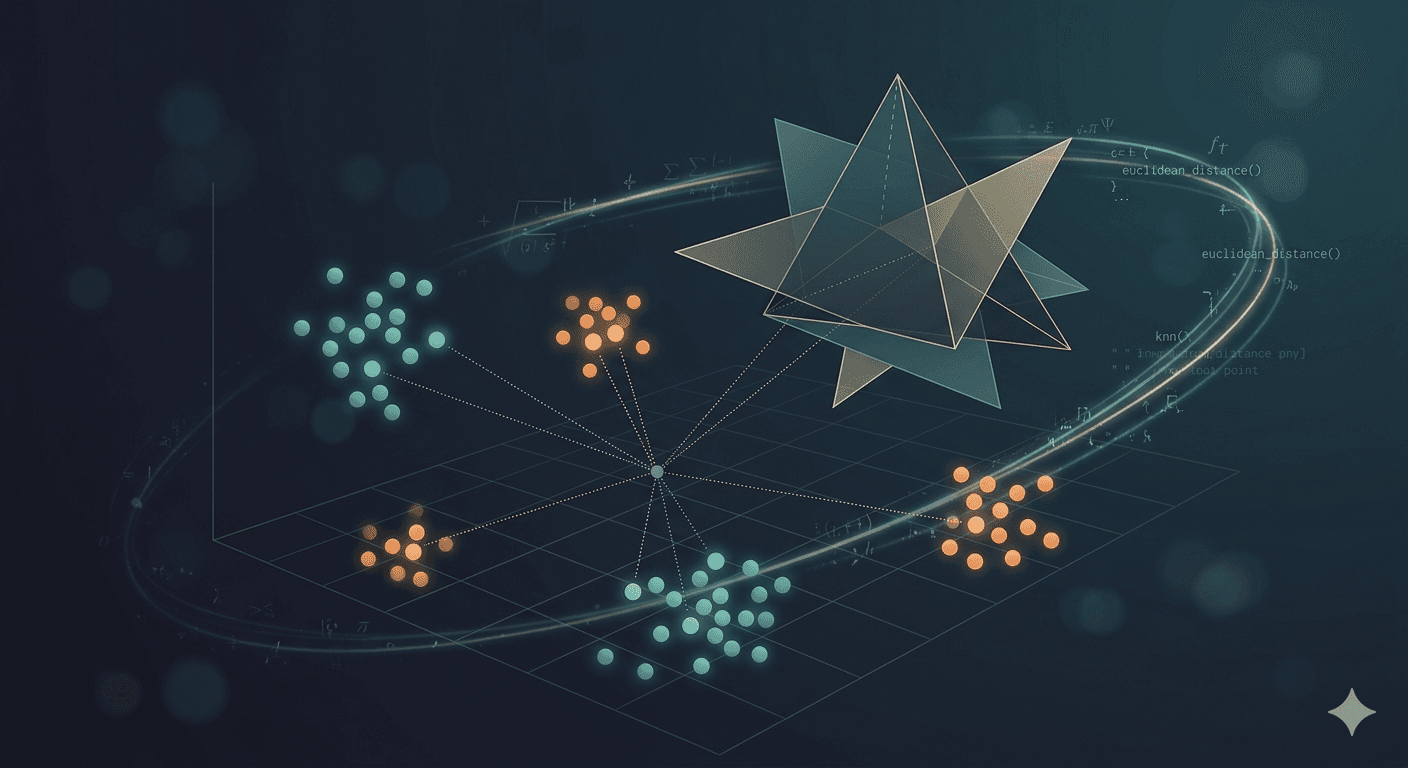
At its core, KNN assumes that similar data points exist in close proximity. If you have a messy dataset of web performance metrics, KNN can classify a new instance, such as a page load event, by looking at its k closest neighbors in feature space. It is a lazy learner because it does not build a model during training. Instead, it does the heavy lifting during prediction time.
The Math: Euclidean Distance
To find the nearest neighbor, we need a way to measure distance. The most common method is Euclidean distance. If we compare two points, x = (x1, x2) and y = (y1, y2), in a 2D space, the formula is: ```text d(x, y) = sqrt((x1 - y1)^2 + (x2 - y2)^2) ``` In a machine learning context, these values correspond to your features, such as page weight, script execution time, and server response latency. KNN uses that distance to decide which stored examples are most similar to the new input.
Technical Implementation: The KNN Function
Here is a raw Python implementation. By avoiding high-level libraries like Scikit-Learn for this demonstration, we can see the exact loop that determines similarity. ```python import numpy as np from collections import Counter def euclidean_distance(x1, x2): return np.sqrt(np.sum((x1 - x2)**2)) class KNN: def __init__(self, k=3): self.k = k def fit(self, X, y): self.X_train = X self.y_train = y def predict(self, X): predictions = [self._predict(x) for x in X] return predictions def _predict(self, x): # 1. Compute the distance to all training points distances = [euclidean_distance(x, x_train) for x_train in self.X_train] # 2. Get the indices of the k nearest neighbors k_indices = np.argsort(distances)[:self.k] # 3. Extract the labels of those k neighbors k_nearest_labels = [self.y_train[i] for i in k_indices] # 4. Return the most common class label (majority vote) most_common = Counter(k_nearest_labels).most_common() return most_common[0][0] ``` This makes the full prediction path explicit: compute all distances, sort them, select the nearest labels, and return the majority class.
The Gotcha: The Curse of Dimensionality
One major challenge in machine learning systems is the curse of dimensionality. As you add more features, the distance between points becomes less meaningful because everything starts to look far away. That weakens the usefulness of nearest-neighbor comparisons and can reduce classification quality.
The Fix: Normalize Your Features
KNN is highly sensitive to feature scale, so you should normalize or standardize your data before running it. If one feature is page weight in bytes and another is load time in seconds, the byte-scale feature can dominate the distance calculation and drown out the smaller feature. Proper scaling prevents that imbalance and makes similarity comparisons more meaningful.
Conclusion: Systems Over Magic
Understanding KNN is a first step toward mastering vector search and other similarity-based systems. By deconstructing these black-box algorithms, we gain the ability to troubleshoot, reason about, and optimize technical systems at the architectural level instead of treating them like magic.
What this note covers
- Introduction
- The Logic: Proximity as Classification
- The Math: Euclidean Distance
- Technical Implementation: The KNN Function
Related technical notes
Related stories
Curated reads to continue the thread.
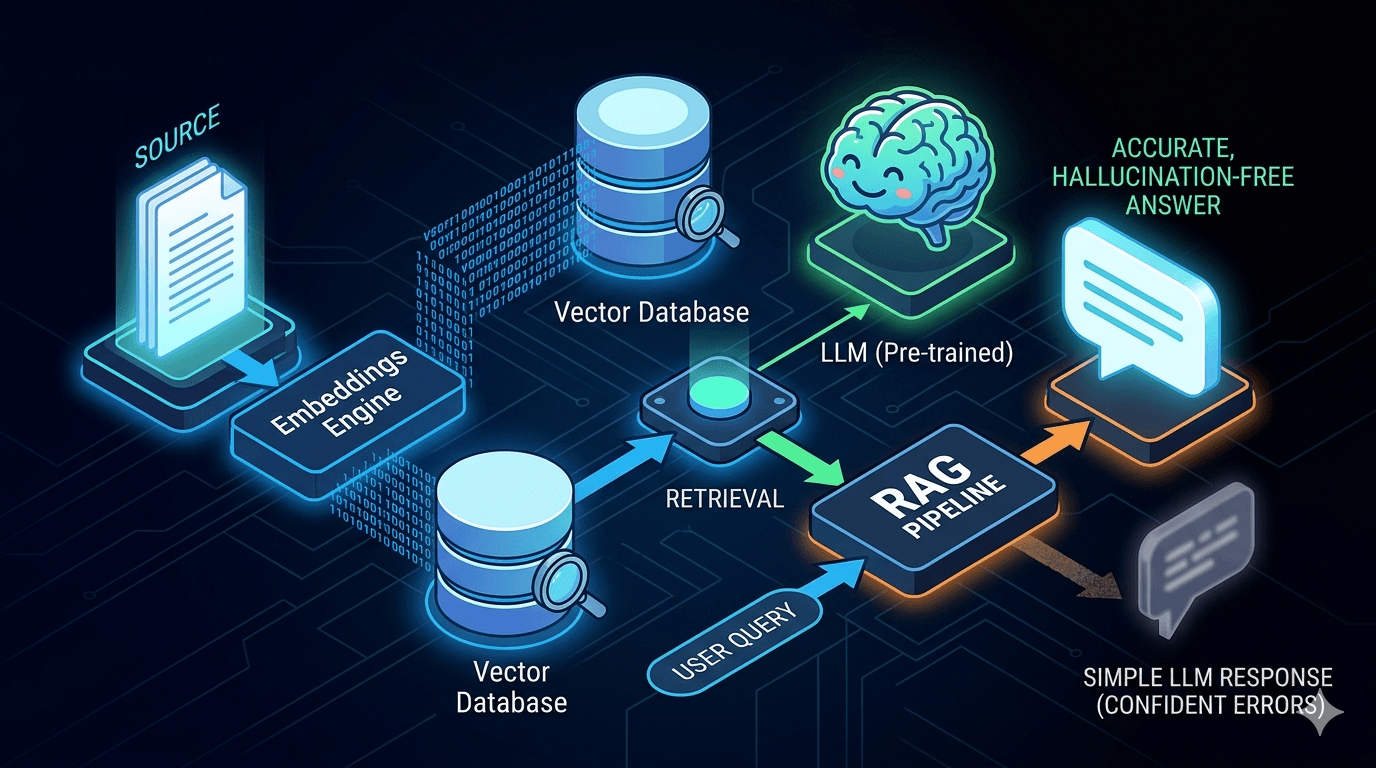
Reducing LLM Hallucinations: Building a RAG-lite Pipeline for Technical Documentation
A practical breakdown of how to reduce LLM hallucinations with a lightweight RAG pipeline using embeddings, FAISS, and top-k retrieval for technical documentation.

Building a Serverless Watchdog: Monitoring Framer 404s with Node.js and AWS Lambda
A deep dive into building a custom automated monitoring system for Framer sites. Learn how to deploy a Node.js crawler on AWS Lambda to detect and alert broken links via Slack webhooks.

Web101 by Han Is Expanding: From Web Development to Deeper Technical Systems
Web101 by Han is evolving beyond web development. This update explains what’s changing, why the scope is expanding into AI, machine learning, algorithms, and technical analysis, and what readers can expect going forward.

AI Website Builders in 2025: Future Trends and Practical Guide
AI is reshaping how websites are built. In 2025, builders powered by artificial intelligence handle design, SEO, and content generation faster than ever. Here’s what to know before you adopt them.
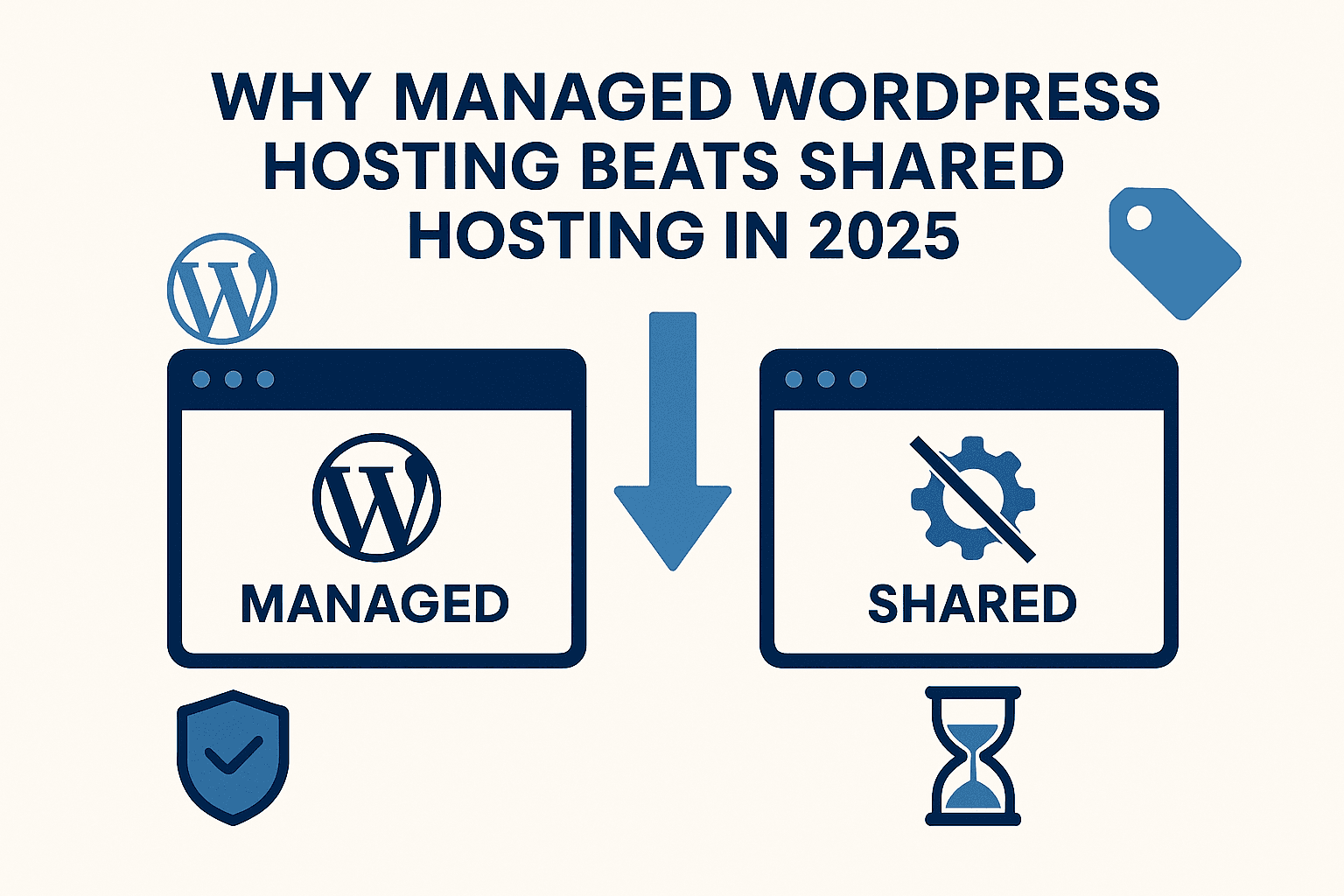
Why Managed WordPress Hosting Beats Shared Hosting in 2025
Shared hosting looks cheap, but managed WordPress hosting saves you time, stress, and money in the long run. Here’s a practical, testable guide to decide with confidence in 2025.

Best Web Hosting for Small Sites (2025): Speed, Support, Price
If you’re launching a lightweight site or portfolio, here’s how to pick a host that’s fast, reliable, and won’t wreck your budget.
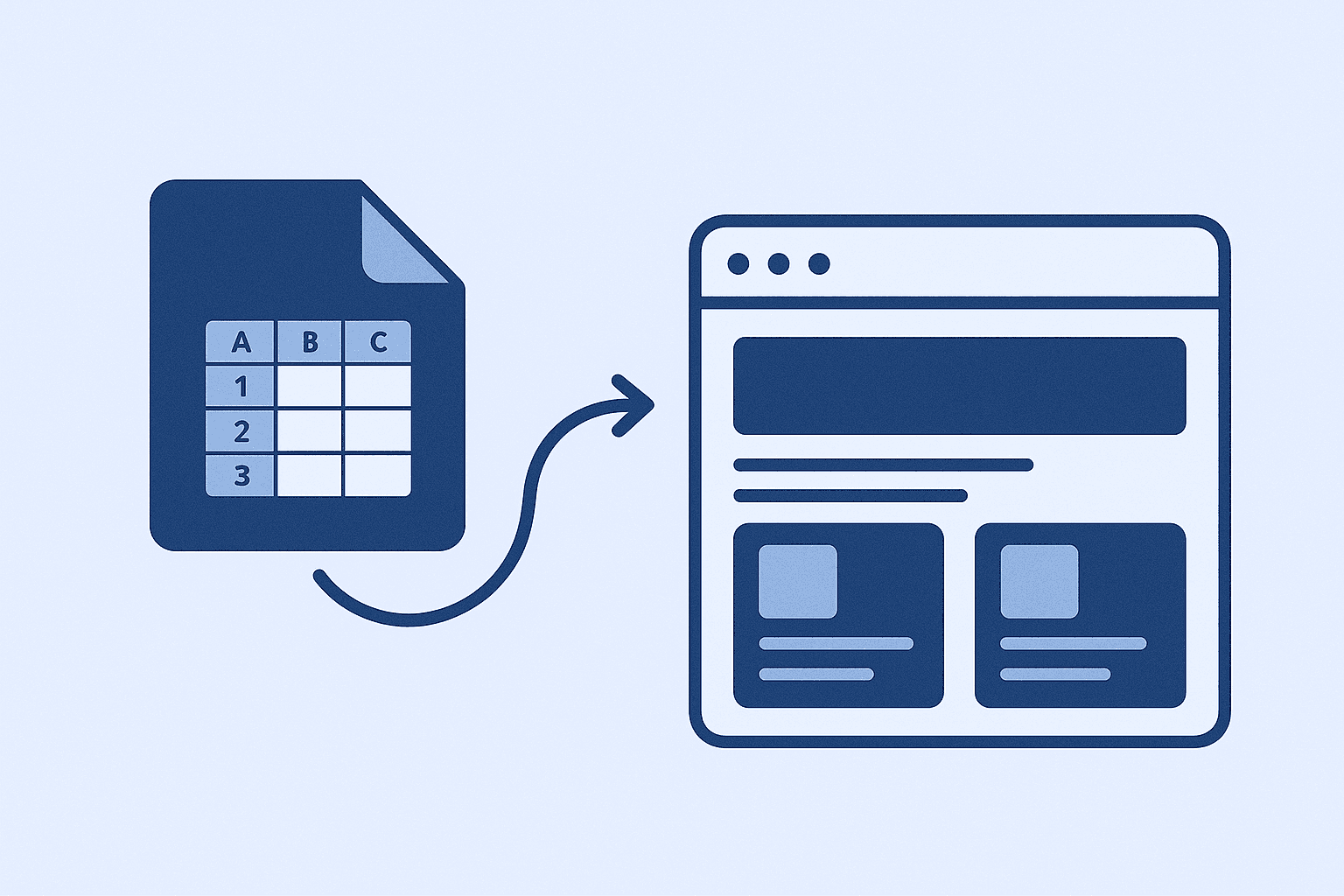
How I Use Google Sheet as a Lightweight CMS
No CMS, no backend, just Google Sheets. Here’s how I let clients update their site content without touching code.

How I Deploy Client Sites Fast (Without Burning Budget)
Speed, stability, and cost-efficiency. Here's my real-world setup for shipping client websites—no fluff, just battle-tested decisions.